
Home

Media

Whole Foods 5% Day

2004 Tradeshow

Our Philosophy

Strategic Plan

Buying Locally

Rebuilding The Farm

Local Organic Links

National Farm Finder

Download & Read
Our New Report
"The Land of Organic Opportunity
"


*View the Report's References*


Rebuilding the Farm –Organically

John Peterson is a third generation family farmer who has witnessed the demise of the American farm economy first hand. In recent decades, millions of American family farmers have been pushed off the land, victims of agricultural policies that favor large factory farms. Industrial farming demands intensive use of toxic chemicals which poison the land, aquifers, and surrounding waterways. Such methods jeopardize public health by exposing citizens to a wide variety of pesticides and other pollutants.

Peterson and thousands of farmers like him have taken strong steps to reverse that trend by building organic farms that sell products to local markets hungry for fresh and healthy local food. His farm, Angelic Organics, is the country's largest community-supported farm, serving produce to over 900 Illinois families each week during the growing season.

Despite their astounding growth, local organic producers are facing a series of challenges that Sustain is helping to overcome. Long-established food distribution and marketing channels favor produce trucked thousands of miles rather than from local farms just down the road. Sustain's Local Organic Initiative has developed a coalition of organic leaders who are setting up systems to expand the network of regional organic farms. They are finding ways to encourage more farmers to use organic methods, create better marketing programs for the sector, and help farmers distribute to local restaurants, supermarkets, institutions, and consumers.

A strong network of organic farms ringing Chicago will provide a greenbelt of open space by encouraging farmers to stay on the land rather than sell to developers. Such sustainable land use decisions will preserve the rural character of outlying areas and also educate other farmers about the economic and environmental benefits of organic farming.


The Land Connection
by Terra Brockman

The Land Connection Foundation is all about connections:
Connecting new organic farmers with land
Connecting growers and eaters of organic food
Connecting people with the soil, the source of all food and of life itself
Saving Farmland

The Land Connection begins and ends with the soil. The organization was started in order to save farmland from development and to make that farmland available to new organic farmers, who then grow organic food that will feed local consumers and connect them with the source of their food.

The Land Connection was thrust into being when we realized that through inaction we were allowing the richest farmland in the United States, perhaps the richest farmland in the world, to be dug up and paved over. We were allowing the land that feeds us all to be taken away forever. For once the land is divided up into 2 acre plots, once the homes are built, the wells dug, the septic fields laid, the driveways paved, that land never goes back to agriculture. It is a one-way street. Cornfields are torn up to build houses, but houses are never torn down to plant a cornfield. Once this precious land and soil, built for us of 50,000 years of the prairie ecosystem, is gone, it’s gone forever.

Yet we can stop the loss of farmland and the destruction of the rural environment quite easily. All we need is responsible land owners, farmers who truly take care of the land and who know that the quality of what you produce and the quality of the environment you leave behind is more important than the quantity of your money in the bank, or the quantity of acres in cultivation.

Through the help of generous donors, The Land Connection targets farmland at risk and purchases it. Once purchased, the new farmers and projects are matched with parcels of land.

Starting New Organic Farms

The Land Connection makes parcels of its farmland available to qualified people who want to do organic farming projects. [may click to an information/application page for interested new organic farmers]. In addition, any local farmer or community member wishing to learn more about the philosophy and practice of organic farming can participate in The Land Connection’s educational training and support program, “Sustaining Farms”

Sustaining Farms participants are paired with experienced and successful local organic farmers who serve as mentors and with whom they may partner in land and equipment rentals. Participants also attend field days, workshops and seminars, and receive resource materials. They learn how to farm in a way that is both environmentally and economically sustainable.

Sustaining Farms participants have the opportunity to:
1. Tap into the knowledge base of skilled organic farmers in Central Illinois, including organic vegetable, fruit, grain and livestock farmers.
2. Enter into an internship or apprenticeship position with a farmer engaged in a similar enterprise
3. Gain entrepreneurial and farm management skills by crafting a farming/business plan that may include creative financing and direct marketing strategies.
4. Develop partnerships, friendships, and networks with other beginning farmers
5. See organic farming practices being used on real farms under a variety of conditions.
6. Learn how to farm in cooperation with the larger ecosystem to ensure healthy soil, water, air and food for future generations

Connecting people with organic food and the source of their food, the Land Through News programs, and books like Fast Food Nation, more and more people are becoming aware of the unhealthy aspects of the current food supply. These people want to have access to food they can trust. Local, organic food is the best source of safe, nutritious, and delicious food.

The Land Connection has a variety of outreach and education initiatives designed to connect growers and eaters of organic food. Some initiatives connect local organic farmers to markets in urban and suburban areas, while others connect consumers with farmers, farmers’ markets, coops and CSAs.

In addition, The Land Connection educates growers and eaters alike on the many benefits of organic food production. These include personal health benefits, economic benefits, and similar benefits that will accrue to future generations.

Organic Food Is Closer Than You Think

For anyone who has eaten some of Farmer John's red kale, the benefits of locally grown organic food are obvious: the taste is out of this world. Yet most vegetables and fruits consumed in the United States aren't delicious, fresh, or locally grown. Far from it.

Instead, they are grown on huge commercial farms that are designed to maximize profits and efficiency – not freshness, taste, and nutritional value. The shipping process alone can take up to three weeks to get from the grower to the table. A local organic system is far more sustainable and healthier. It can cut the time it takes to get food from the field to the table by 80 percent or more – dramatically lowering energy and shipping costs. In addition, organic farms promote biodiversity by utilizing agricultural methods that preserve wildlife habitat without the use of chemicals that poison wildlife and native plants.

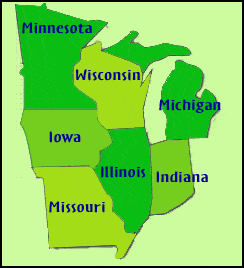
Farmer John's Illinois farm, Angelic Organics, is part of Sustain's Local Organic Initiative that is working with organic farmers, food processors, and distributors to build and strengthen the network of organic farms ringing Chicago. To locate your local organic neighbors click here - by supporting local organic farmers you're helping to build a truly precious and life

© 2002 A Project of Sustain