
910 Scotch Hill Road
Brodhead, WI 53520
(608) 897-4288
Scotchhillfarm@wekz.net
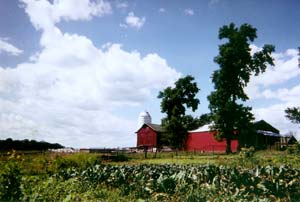
Scotch Hill Farm is a CSA membership and market garden and family cultivate, which began in 1994. It started with only 5 subscribing families and developed to 140 in its tenth developing season.
The homestead incorporates domesticated animals and poultry mind into crisp vegetable and herb trim creation to guarantee satisfactory soil ripeness and natural issue and to save uncommon and jeopardized household species.
The family (Tony, Dela, and their 4 kids) raised deliver naturally for a long time for their own particular utilization before starting slowly to pitch memberships to different families.
Scotch Hill Farm has CSA drop-off destinations in Janesville, Wisconsin: and Crystal Lake, Ravenswood and Oak Park, Illinois, and in addition on-cultivate get for south Madison zone groups. The ranch raises chickens, turkeys, sheep and a few types of enrolled draining goats.
Scotch Hill Farm has around 28 sections of land in vegetable generation. Vegetables and herbs in coordinate market deals number more than 100 assortments, and new treasure offerings are included each spring.
The homestead offers constrained amounts of meat and eggs. Dela and Tony are progressing in the direction of state accreditation for nourishment preparing keeping in mind the end goal to offer canned vegetables and crisp bread.
The whole Ends family works the 5 sections of land of land at Scotch Hill Farm and also extra sections of land the family leases for vegetable yields and baling feed. Everybody tends garden and field, and all assistance administer to the creatures.
Micah (13), who is keen on turning into a veterinarian, particularly likes to invest energy with the sheep, goats, and rabbits, and additionally his horse and steed. Holly (23) and Dela invest a considerable measure of energy creating milk cleanser and developing eatable blooms.
Tony does the vast majority of the field-scale work and handles the vast majority of the deals and showcasing for the ranch and child, Joel, works with yields and creatures. Child in-law Aaron, who has a development work, puts in numerous hours assisting with cultivate ventures, as well.
Three dogs Tamba, Spot and Bootsand five felines are additionally part of the Ends family. Holly has her own particular Jack Russell Terrier named Eli, and Scooby the horse adjusts the gathering.
Throughout the previous six years, Scotch Hill Farm has been facilitating a great student, Katie Korson, who is moving in the direction of beginning a CSA cultivate on her folks hamburger cultivate in Michigan.
Facilitating Katie is a piece of Scotch Hill Farms sense of duty regarding the State-Line Collaborative Regional Alliance for Farmer Training, a rancher drove exertion in Illinois and Wisconsin to enable youthful grown-ups to prepare for manageable and natural cultivating.
Since 1999, the homestead has hand-processed a saturating cleanser from goats drain. In the 2002 developing season, the homestead manufactured a business kitchen and quadrupled creation and offer of drain cleanser.
Deals have dramatically increased again the previous 2 years and are currently around 33% of ranch wage. Dela and Tony got a USDA Small Business Innovation Research allow to form their cleanser generation into a model farmstead operation. In 2004 they started Phase II of this undertaking to copy their model on 10 cultivates over a 2-year time frame.
Theyve been counseled in this work by a farming financial expert from the UW Madison and the Center for Integrated Agricultural Systems.
The homestead offers drain cleanser year-round at agriculturists markets, exceptional occasions, advantage deals and off of their new site www.scotchhillfarm.com. Tony and Dela are going to public expos for the society and helpful, as well.
Other Web website postings for the homestead incorporate Wisconsin Dairy Artisans, ATTRA, MACSAC and FamilyFarmed.org. Participations incorporate Madison Area Community Supported Agriculture Coalition, American Livestock Breeds Conservancy and a few dairy goat affiliations.
Why is developing natural a need for your family?
Regarding and looking after the earth is a mission for us. Our Community Supported Agriculture program is an approach to instruct others about empowering eating.
Whats your most loved piece of being a natural rancher?
Cultivating as we do it is a physically difficult, yet profoundly recuperating and supporting knowledge. Outwardly the patio nurseries are a palette of hues and surfaces. The garden is extraordinarily fragrant. There is in no way like inclination the earth in your grasp and between your toes. There is an ensemble of soundsrustling leaves, winged creatures and creepy crawlies.
Furthermore, obviously, the essence of an ideal ready vegetable ideal off the plant resembles nothing else accessible to eat anyplace. Each season is an energizing and entrancing instruction and experience. Weve imparted it to specialist shares, understudies, visiting ranch guests and, obviously, our endorsers.
What is your slightest most loved part?
Dry spells and being exceptionally worn out from the longest days of the yearwhich are truly regularly the most sweltering days, as well. Also, numerous assortments of hurtful creepy crawlies that stance issues for us since we have insufficient land to broadly shift turns. Weve strove for just about 10 years to purchase extra property, yet arrive costs rise quicker than we enhance our way to secure it.
For what reason should individuals purchase natural items rather than different alternatives?
Our planet and all its life, including our own, are endowments from God and deserving the very pinnacle of regard. Perfect and fortifying cultivating hones deliver a superior situation and the best quality sustenance.
Purchasing natural nourishment is a route for customers to rehearse cognizant consumerism, tending to our reality while additionally watching over themselves and their family. Natural nourishment mirrors the genuine (unsubsidized) cost of creation. When it is privately developed, it doesn’t depend vigorously on government bolsters or nonrenewable assets, for example, non-renewable energy sources.
What makes your ranch uncommon?
Its our ranch!! Our family has buckled down finished the years to assemble the business and resuscitate a brilliant old ranch that was falling into demolish. Most unique structures are still here and weve put them all to utilize once more. Our homestead capacities as its own little biological system with everything cooperating: soil, plants, creatures and individuals.
Through our Community Supported Agriculture, we have possessed the capacity to impart our homestead to our urban enrollment. Its a decent relationship! A lot of horticulture today is particular, with ranches becoming just a single or two yields on an extensive scale, or raising one kind of domesticated animals in gigantic numbers.
We are making a decent attempt to incorporate vegetable yield creation with field based domesticated animals. Our farmstead cleanser produced using our own drain is helping us have the capacity to bear the cost of the time and cost of others consciously treating and overseeing domesticated animals.
Where might you like your business to be one year from now? In the following 5 years? 10?
Monetarily strong. Medical coverage for every one of us. Cash enough for retirement spared. Ready to give specialists a decent wage and advantages. Enhance and grow our associations with customers. To have the capacity to keep up ranch and obligation protection, which is persistently ascending in cost and additionally undermined to be suspended in light of the fact that what we do doesnt fit the form, in this universe of claim insane purchasers.
Where would consumers be able to get your items?
Scotch Hill Farm has CSA drop-off locales in Janesville, Wisconsin: and Crystal Lake, Ravenswood and Oak Park, Illinois, and in addition on-cultivate get for south Madison zone groups. Cleanser items are accessible online at www.scotchhillfarm.com.
Updated 4/20/2006