
21123 Grade School Road
Caledonia, IL 61011
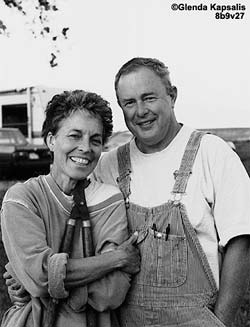
Kinnikinnick Farm is a thirty-acre organic garden run by David and Susan Cleverdon. David has been working on this land for over 11 years. He mostly produces vegetables like arugula, Italian cooking greens, baby lettuce mix, chicories, heirloom tomatoes, beets, garlic, squash, and shell beans.
Susan does an off-farm job at Beloit College. A six-person team helps David with his farmstead. The crew also includes nine Jack Russell Terriers: Cooper, Spencer, Nym, Tinker, Prudy, Tessa, Piper, Annie and Riley.
For the Cleverdons, branded organic farming is the only right way to grow food. From the very beginning, when David and Susan planted their first backyard garden, they were maintaining it organically. That was the only approach that made sense to them.
As the garden was expanding, it became a vital part of the household economy. Finally, it became a full-size farm. David grew up in the tormented 50s and 60s hearing the Holocaust stories and taking part in civil rights movement. As a result, he doesn’t like obsession with purity, including organic purity. Being organic not a cult, but a sensible way of working and living in harmony with the planet.
For David, the distinctions between organic and non-organic farmers are not as significant as many people think. Farmers are farmers. Each of them struggles with weather, weeds, insects, loans, low prices, equipment breakdowns, etc.
And each enjoys the same things like self-sustenance, working with his hands as well as his head, taking risks, and the satisfaction of making it. Besides “organic” labels, there are many important things people should consider when buying food. This includes the producer’s reputation, place of origin, nutritious properties of different plants, cost etc.
Local food is preferable. David would advise opting for the organic product if it is evidently better and the price is not excessive. He applies the same philosophy to his own produce, so he works to create products that have the clear superiority in taste, texture, and color over any conventional counterparts.
The organic crops are mostly nutritionally superior and eco-friendly. But, when shipped across big distances, they lose much of the advantage. Consumers who care about the food their family eats should learn about the farmer who grew it. That means choosing local and seasonal crops, not just focusing on the organic.
Kinnikinnick Farm is a special location. It grows great produce and has many interesting spots. It is a place for people to get together, celebrate the change of seasons and escape from the modern world for a while.
Kinnikinnick produce is available at the Evanston Farmers’ Market and Chicago’s Green City Market.
For more details, please call (815) 292-3288 or send your e-mail to kinnikinnickfarm@yahoo.com.