
|
Flood Relief Fund for Midwest Farmers
Read the latest from the Wedge Co-OpDonate to the Flood Relief Fund Food, Farm, and Jobs Act Becomes LawIllinois Governor Rod Blagojevich recently signed major new legislation to encourage the production, processing, and distribution of local and organic food. House Bill 1300, the Illinois Food, Farm and Jobs Act of 2007, passed the state Senate 57-0 on May 24th after passing the House 108-8. It was at the 2007 FamilyFarmed.org EXPO in March when Governor Blagojevich’s Deputy Chief of Staff Steve Frenkel vowed that the Governor will sign the Bill. “This legislation is a way for farmers, consumers, and businesses to benefit by producing more local and organic food right here in Illinois,” says Evanston State Representative Julie Hamos, chief sponsor of the Act.”The key to winning this victory was the outstanding coalition that emerged to work together towards passage,” says Jim Slama , President of FamilyFarmed.org. “People, businesses, and organizations from every section of the state recognized the value of the Food, Farms, and Jobs Act and actively supported it.” Other coalition leaders include the Evanston Food Policy Council, the Illinois Farmer Consumer Coalition, The Illinois Stewardship Alliance, and Northern Illinois University. State Senator Jacqueline Collins was the chief Senate sponsor. Read complete article on the Food, Farm and Jobs Act FamilyFarmed.org Wins First Ever Yahoo! Green Award
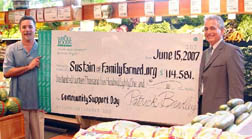
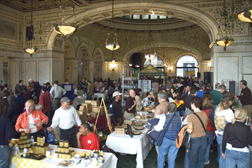
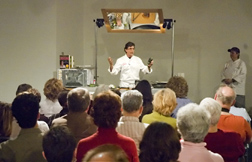
Learn about the NetSquared Conference Thank You, Whole Foods Market!The Sustain staff and Board, plus the network of FamilyFarmed.org producers from across the Midwest, would like to express our gratitude to Whole Foods Market for its major financial support. On May 19, they earmarked 5% of their sales from each store in the Midwest to support our efforts to promote local and organic food production. On June 15, Whole Foods Market Midwest regional president Patrick Bradley presented Sustain president, Jim Slama, with a check for $114,581. “Whole Foods Market is going to ‘walk our talk’ with financial support for our partners at Sustain and FamilyFarmed.org so that we continue our work together to build the supply and quality of local sustainably grown and organic food. We believe this financial assistance can make a very significant difference in helping local agriculture grow and flourish in the communities we serve and will contribute to significant economic development in the region,” says Bradley. Whole Foods Market has partnered with Sustain on its local food initiatives for the past four years. FamilyFarmed.org EXPO 2007On March 24th and 25th, over 3,000 people flocked to the Chicago Cultural Center for the 2007 FamilyFarmed.org EXPO to learn about and enjoy local and organic food. 120 exhibitors including local family farmers and artisanal food producers filled two sold-out halls, while the chef demos, workshops and Friday night’s Localicious Party were all packed with supporters of the local food movement. Several national leaders spoke at the event, including Organic Valley ‘C-E-I-E-I-O” George Siemon, Nature’s Path CEO Arran Stephens, Farm Aid director Carolyn Mugar, and Whole Foods Midwest regional president Patrick Bradley, among many, many others. We look forward to an even more exciting EXPO next year! Learn more and see pictures from EXPO 2007 FamilyFarmed.org EXPO 2006Learn more and see pictures from EXPO 2006 FamilyFarmed.org EXPO 2008 |
||
| FamilyFarmed.orgis a website, food label, and EXPO that supports Midwestern organic farmers by connecting them with consumers and commercial buyers. FamilyFarmed.org creates sustainable economic development, builds community, and contributes to a healthy environment by encouraging people to buy food from local producers. | |||





 Yahoo! recently named FamilyFarmed.org as the inaugural recipient of their Yahoo! for Good Green Award. The award recognizes web-based initiatives which are striving to achieve good in the world, and with a little boost, could do even more. FamilyFarmed.org staff met with representatives at Yahoo! to discuss the potential of Web 2.0 tools such as food and agriculture blogging, e-commerce, and online videos to help FamilyFarmed.org reach a broader audience with their message about sustainably grown local food.In related news, FamilyFarmed.org was chosen in an international competition as one of 21 featured projects at the NetSquared conference to be brought to the next level through financial and technical support with some of the world’s leading experts and funders of technology and social networking. “Our goal through this experience is to develop the vision and funding to take FamilyFarmed.org to the next level as a web 2.0 social network,” says FamilyFarmed.org founder Jim Slama. “The contacts and knowledge gained in the NetSquared community will go a long way in supporting this.”
 |